
10B Roller Chain Dimensions, Specifications & Applications
Introduction
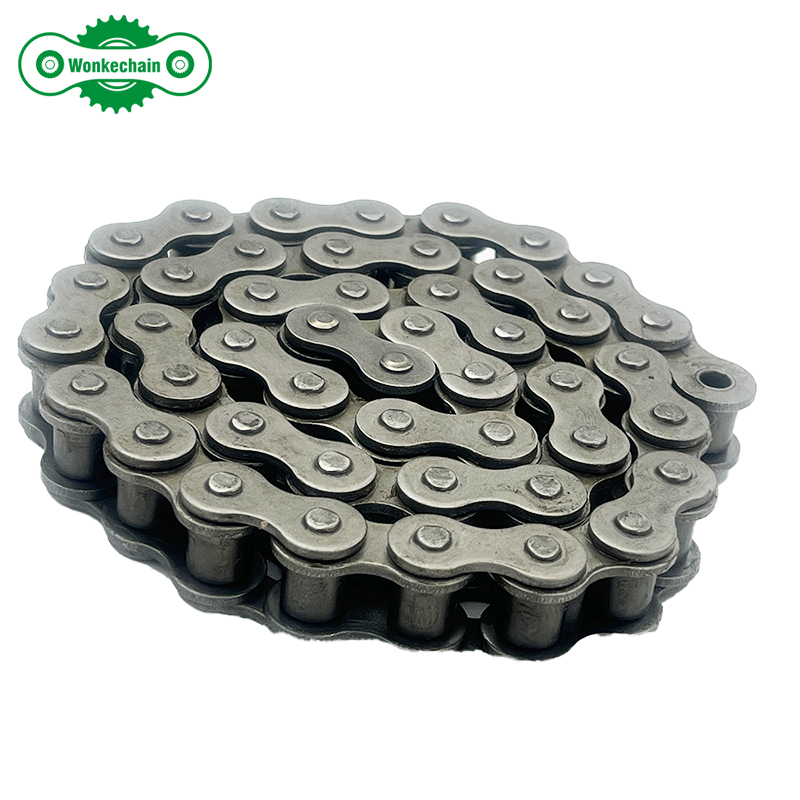
Roller chains are a simple and reliable way to move mechanical power in industrial equipment. There are many chain sizes. The 10B is a common choice in the B-series family. You find it in European machines, Asian equipment, and replacement stock worldwide.
You may be buying a replacement chain. You may be designing a new drive system. You may be checking if a 10B works with your sprockets. This guide gives you the key details. You get dimensions, load ratings, standards, and practical selection tips.
What Is a 10B Roller Chain?
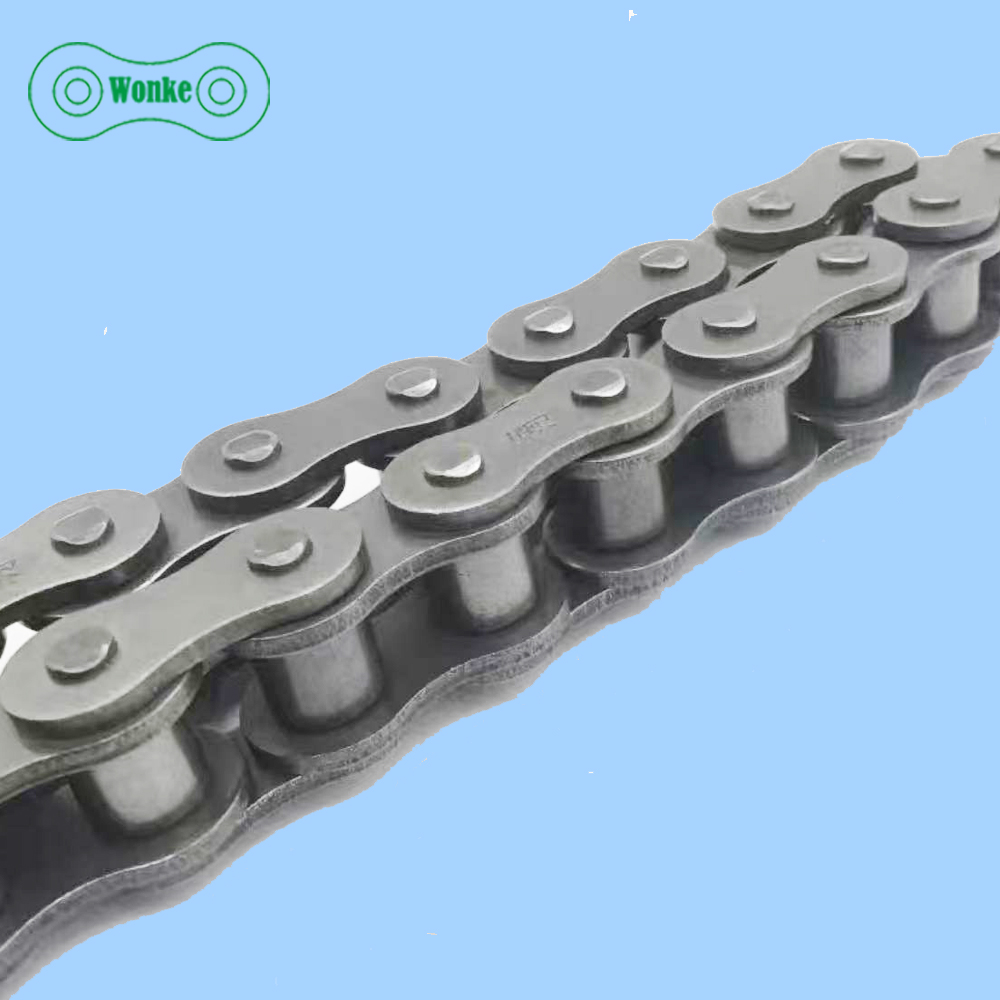
The 10B is a single-strand roller chain. It belongs to the B-series group from ISO 606. The "B" means British Standard chain geometry. This is different from the American ANSI A-series in several key dimensions.
The "10" means a chain with a 15.875 mm pitch. This is the same pitch as an ANSI 10A chain. But the similarity stops there. B-series chains have a wider inner link gap. They also have a different pin configuration. So a 10B cannot be swapped with a 10A.
10B chains come in these types:
- 10B-1: single-strand
- 10B-2: double-strand
- 10B-3: triple-strand
The specifications below are for the single-strand version. This is the most common type for general industrial use.
10B Roller Chain Dimensions and Specifications
The values below are standard reference dimensions. They are for a single-strand 10B roller chain made to ISO 606 / DIN 8187 / BS 228.
| Parameter | Measurement |
|---|---|
| Pitch (P) | 15.875 mm (5/8 in) |
| Inner Link Width (b₁) | 9.65 mm |
| Roller Diameter (d₁) | 10.16 mm |
| Pin Diameter (d₂) | 5.08 mm |
| Maximum Pin Length (L) | 19.6 mm |
| Maximum Pin Length, Clevis End (Lc) | 23.7 mm |
| Link Plate Width | 14.73 mm |
| Link Plate Thickness | 1.7 mm |
| Minimum Tensile Strength | 2270 kgf (≈22.3 kN) |
| Average Tensile Strength | 2800 kgf |
Final dimensions can vary a little between makers. Always check the actual product or the supplier's technical datasheet before you order.
What These Dimensions Mean in Practice
Pitch (15.875 mm / 5/8 in). This is the distance from the center of one pin to the center of the next pin. It decides sprocket compatibility. A 10B chain must go with a 5/8-inch-pitch sprocket. The sprocket must be cut for the B-series tooth profile.
Inner Width (9.65 mm). This is the distance between the inner link plates. It affects how the chain sits on the sprocket teeth. The 10B's inner width is a bit wider than the 10A's 9.40 mm. This is one of the main reasons they are not interchangeable.
Roller Diameter (10.16 mm). The rollers touch the sprocket tooth gaps. This size affects seating depth, contact area, and long-term wear.
Pin Diameter (5.08 mm). The pins carry the shear load during power transmission. A larger pin diameter gives better resistance to shock loads. It also helps with chain durability.
Tensile Strength. The 10B chain has a minimum tensile load of 2270 kgf. It has an average tensile load of 2800 kgf. In real use, the safe working load should stay well below these numbers. The exact limit depends on speed and working conditions.
Standards and Interchangeability
The 10B roller chain is made to several standards:
- ISO 606 — the international standard for short-pitch transmission roller chains
- DIN 8187 — the German standard for B-series chains
- BS 228 — the original British Standard for transmission roller chains
These standards set the chain geometry, tolerances, and minimum mechanical properties. A 10B chain made to any of these standards will work with matching sprockets and accessories.
Important: The 10B and 10A have the same 15.875 mm pitch. But they are not interchangeable. The 10B has an inner width of 9.65 mm. The 10A has an inner width of 9.40 mm. Using the wrong series on a sprocket can cause poor engagement. It can cause excess wear and noise. It can even make the chain come off. Always check the chain series before you buy.
Common Applications of 10B Roller Chain
The 10B is mainly used for power transmission in moderate-duty industrial machines. It is very common in equipment made in Europe and Asia. It is also common in replacement stock worldwide.
- Packaging machinery — drives for conveyors, labeling machines, cartoners, and wrapping equipment
- Material handling equipment — belt conveyors, roller conveyors, and sortation systems
- Agricultural machinery — feed mechanisms, augers, balers, and harvesting equipment
- Machine tools — feed drives, coolant pumps, and auxiliary drives
- Food and beverage processing — light conveying, often in stainless steel for washdown areas
- General industrial transmission — mixers, compressors, air handling units, and other rotary equipment
For heavier loads, a 12B chain (19.05 mm pitch) is a better choice. For lighter, space-limited jobs, an 08B chain (12.70 mm pitch) may cost less.
10B vs. 10A vs. 08B: Quick Comparison
| Parameter | 08B | 10B | 12B | 10A (ANSI) |
|---|---|---|---|---|
| Pitch | 12.70 mm | 15.875 mm | 19.05 mm | 15.875 mm |
| Inner Width | 7.75 mm | 9.65 mm | 11.68 mm | 9.40 mm |
| Roller Diameter | 8.51 mm | 10.16 mm | 12.07 mm | 10.16 mm |
| Min. Tensile Strength | ~1890 kgf | 2270 kgf | ~3180 kgf | ~2270 kgf |
Note: Figures for 08B, 12B, and 10A are standard reference data from published spec sheets. Check the maker's official values for the exact product you want to buy.
The 10B sits between the compact 08B and the heavier 12B. It gives good load capacity in a 15.875 mm pitch size. This works well for medium-frame industrial machines.
How to Select the Right 10B Chain
Picking the right 10B chain is more than just matching the part number. Work through these points:
1. Load requirements. Work out the design power. Multiply the actual power by a service factor. The factor depends on load type (steady, moderate shock, or heavy shock) and daily operating hours. Then pick a chain with enough safety margin below its working load rating.
2. Sprocket selection. Use sprockets cut for the 10B (B-series tooth profile). For general use, 17 to 21 teeth is a good range. For high-speed work, use at least 21 teeth. For low-speed, high-torque jobs, 13 teeth can work. But expect more wear and noise.
3. Chain length. Use the standard roller chain length formula:
L (in pitches) = (2C / P) + (N₁ + N₂) / 2 + [(N₂ − N₁)² × P] / (4π²C)
Where:
- C = center distance (mm)
- P = pitch (15.875 mm)
- N₁, N₂ = number of teeth on each sprocket
Round up to the nearest even number of links. If you are not sure, a good supplier can confirm the length.
4. Operating environment. Standard carbon steel chain works well in clean, dry, indoor areas with good lubrication. For dusty or humid places, think about a surface-treated chain (black oxide or zinc-plated). For food contact or frequent washdown areas, stainless steel 10B chain is usually needed.
5. Attachment requirements. If you are using the chain for conveying, ask about attachment links. Straight tabs and bent tabs are common for 10B chain.
Installation and Maintenance Best Practices
A good chain can fail early if it is installed or maintained poorly. Follow these steps to get the full life from your 10B chain.
Tension. Run the chain with a little slack. This is typically 2% to 4% of the center distance on the slack side. Too much tension puts extra pressure on the pins and bushings. Too little tension causes slapping, vibration, and faster wear.
Alignment. Make sure both sprockets are in the same plane. Misalignment is a common cause of early chain failure. It creates edge loading on the link plates. It also causes uneven roller contact.
Lubrication. Lubricate at the pin and bushing interface. Do not just oil the outside of the rollers. For moderate speeds, drip lubrication or an oil bath works well. Pick an oil viscosity that matches your speed and room temperature.
Inspection. Check chain elongation often. When the chain has stretched about 2–3% of its original length, it has reached its useful life. Also look for cracked rollers, deformed plates, and rust.
Sprocket condition. A worn sprocket will quickly damage a new chain. If the sprocket teeth look hooked, sharpened, or unevenly worn, change the sprockets with the chain.
Frequently Asked Questions
Q1: What is the pitch of a 10B roller chain?
The 10B chain pitch is 15.875 mm (5/8 inch). It is measured from the center of one pin to the center of the next.
Q2: What is the tensile strength of a 10B chain?
The minimum tensile load is 2270 kgf (about 22.3 kN). The average tensile load is 2800 kgf.
Q3: Can I use a 10B chain with a 10A sprocket?
No. Both chains have the same pitch. But the 10B has a wider inner width (9.65 mm) than the 10A (9.40 mm). Using the wrong series causes poor engagement and faster wear. Always match the chain series to the sprocket series.
Q4: What is the difference between 10B-1 and 10B-2 chains?
10B-1 is a single-strand chain. 10B-2 is a double-strand chain. It has two rows joined by common pins. Double-strand chains give more load capacity at the same pitch.
Q5: How long is a standard 10B chain?
Standard coils are typically 5 meters (about 315 links). Some suppliers offer 100-link pieces. Custom cut lengths are common from bulk makers.
Q6: How often should a 10B chain be replaced?
Replace it when elongation reaches 2–3%. Actual service life depends on load, speed, lubrication quality, alignment, and operating environment.
Conclusion
The 10B roller chain is a reliable, widely used part for moderate-duty power transmission. Knowing the exact dimensions helps you pick the right chain. It also helps you avoid the costly mistake of fitting the wrong series. Remember: 15.875 mm pitch, 9.65 mm inner width, 10.16 mm roller diameter, and 2270 kgf minimum tensile strength.
For distributors, wholesalers, OEMs, and maintenance teams, working directly with a maker is the best way to get consistent quality and good pricing.
CTA
Do you need a reliable supply of 10B roller chain for your machines, stock, or OEM program?
We offer factory-direct 10B chains in bulk amounts and custom lengths. We also have matching sprockets, attachments, and OEM options. Every batch is made to ISO 606 standards for consistent quality.
Contact our engineering team with your needs. We will confirm the correct chain for your job. We will give you a competitive quote. We will support you with technical documents and samples as needed.